
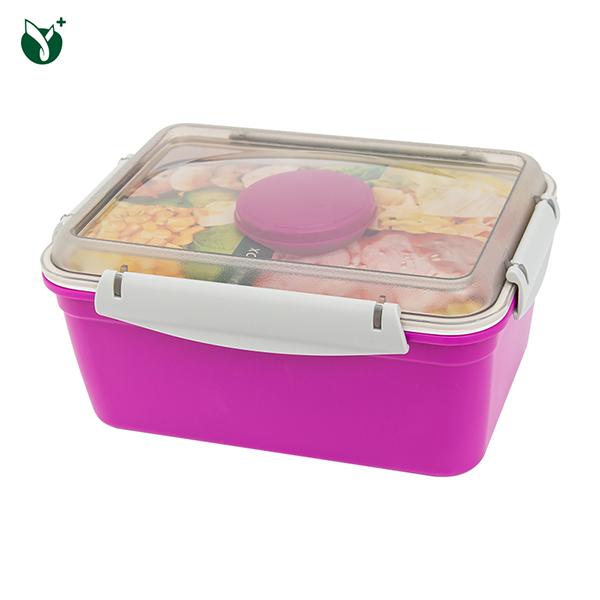
In a significant stride towards sustainability, a pioneering company has launched an eco-friendly children’s lunch box that promises to revolutionize the way families approach everyday meal packing. Developed through advanced research in biodegradable materials, this lunch box exemplifies the fusion of environmental consciousness and practical design, aiming to reduce plastic waste and promote greener habits from an early age.
### A New Era of Green Innovation
The company behind this breakthrough boasts a Research and Development team with extensive experience in biodegradable materials. Their commitment to innovation is reflected in their close collaboration with the School of Materials Science and Chemical Engineering at Ningbo University. This partnership marries academic insight with industrial expertise, creating materials that are not only environmentally safe but also durable and user-friendly.
With global plastic pollution reaching alarming levels, the launch of this eco-friendly lunch box aligns perfectly with the growing demand for sustainable everyday products. The initiative marks a new chapter in material science — one that embraces green chemistry and aims to mitigate the ecological footprint of consumer goods.
### Features Tailored for Children and Parents
Understanding the needs of children and caregivers, the lunch box is designed to be lightweight, easy to open, and safe. Made entirely from biodegradable materials, the product decomposes naturally over time without leaving harmful residues. Unlike conventional plastic lunch boxes, which may persist for centuries in landfills and oceans, this eco-friendly alternative supports a circular lifecycle, minimizing environmental damage.
Additionally, the lunch box is free from BPA and other toxic chemicals commonly found in plastic containers. This ensures that food remains safe and uncontaminated, addressing health concerns that many parents harbor regarding food storage products.
### Innovation Rooted in Rigorous Research
The company’s R&D team's long-standing expertise in biodegradable materials provided a solid foundation for this development. By leveraging cutting-edge techniques in material engineering, coupled with the rigorous academic research from Ningbo University’s School of Materials Science and Chemical Engineering, the team succeeded in formulating a material blend that balances biodegradability with strength and functional usability.
This innovative material withstands daily use, resists leaks, and retains its structural integrity during washing, all while decomposing naturally when disposed of properly. The collaboration with supporting academic institutions ensures continuous improvement, promising further advancements in eco-friendly materials for consumer products.
### Environmental and Social Impact
The introduction of an eco-friendly children’s lunch box goes beyond individual consumer benefits — it embodies a shift towards collective environmental responsibility. Plastic waste generated by disposable or long-lasting plastic containers is a major contributor to pollution. Traditional lunch boxes, if lost, discarded, or broken, contribute to landfill overflow and ocean contamination, threatening ecosystems and wildlife.
By adopting biodegradable alternatives, families can actively participate in reducing plastic waste. Moreover, early exposure to sustainable products educates children about environmental stewardship, fostering a generation more attuned to the importance of living in harmony with nature.
The company’s initiative thus serves as a beacon for other manufacturers, highlighting the feasibility and necessity of integrating eco-conscious materials into everyday products.
### Expanding the Vision: Towards a Sustainable Future
Beyond this lunch box, the company envisions expanding its product line to include a range of environmentally friendly consumer goods. Leveraging the ongoing academic collaboration, they plan to innovate more biodegradable materials that can replace plastics in various applications, from packaging to household items.
Their vision aligns perfectly with global sustainability goals, including those outlined by the United Nations for responsible consumption and production. By prioritizing development in biodegradable and environmentally friendly materials, the company sets an example for the industry, proving that green innovation and commercial viability can go hand in hand.
### Conclusion
The launch of the eco-friendly children’s lunch box is a testament to how science, industry, and education can synergize to address pressing environmental challenges. Through advanced research, practical design, and a commitment to sustainability, the company is opening a new era of green consumer products that do not compromise on quality or safety.
Families now have access to a lunch box that supports their health and environmental values, while the company paves the way for future innovations centered on biodegradable materials — proving that every small change, such as choosing a greener lunch box, can contribute to a better and cleaner world for generations to come.