
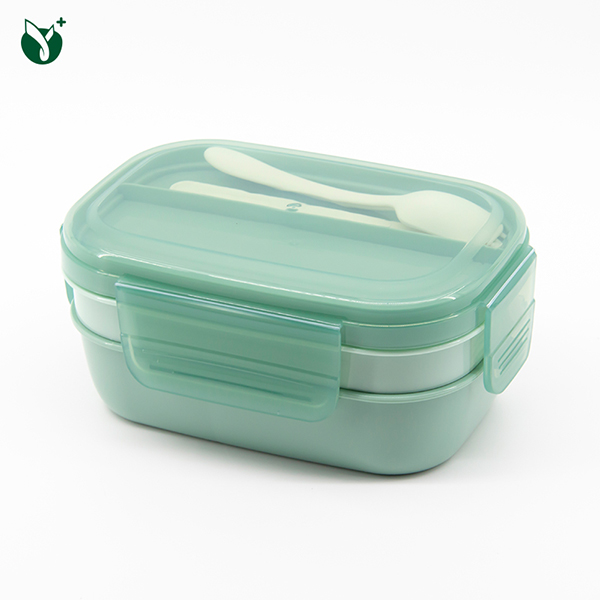
In the ongoing global pursuit of sustainable development and environmental preservation, the demand for biodegradable materials continues to grow at an unprecedented pace. Responding to this urgent need, a leading company specializing in advanced material technology has made significant progress in the development of environmentally-friendly polypropylene (PP) plastic containers. By leveraging a highly experienced R&D team and strategic collaboration with the School of Materials Science and Chemical Engineering at Ningbo University, this innovation promises to open a new chapter in the production and application of sustainable packaging solutions.
### Pioneering Sustainable Development in Plastic Packaging
Plastic containers, particularly those made from polypropylene, have long been favored for their durability, lightweight nature, and cost-effectiveness. However, traditional PP plastics pose considerable environmental challenges due to their slow degradation rates and accumulation in natural ecosystems. This has sparked a global call for innovative materials that retain the benefits of conventional plastics while minimizing ecological impact.
Answering this call, the company’s Research and Development team has dedicated substantial expertise and resources toward transforming PP plastic technology. With a background rich in polymer science and environmental materials, the R&D team focuses on pioneering biodegradable solutions that integrate seamlessly into current manufacturing processes, allowing for both scalability and broad adoption.
### A Synergistic Partnership with Ningbo University
Central to the company’s success is its partnership with the prestigious School of Materials Science and Chemical Engineering at Ningbo University. This collaboration combines industry insight with academic research excellence, fostering an environment where cutting-edge scientific exploration drives practical applications.
The interdisciplinary research initiative focuses on enhancing the biodegradability of polypropylene materials without compromising their mechanical properties or utility. By employing advanced chemical engineering techniques and exploring novel biodegradable additives, the team has developed a range of PP plastic containers that can significantly reduce environmental burden after disposal.
Ningbo University’s involvement ensures that the development process is grounded in solid scientific methodology. The school’s state-of-the-art laboratories and expert faculty provide critical support in characterizing material performance, optimizing formulations, and conducting environmental impact assessments. Together, the partnership exemplifies how academia and industry can unite to address pressing environmental challenges through innovation.
### Breakthroughs in Biodegradable PP Plastic Containers
The hallmark of this advancement is the creation of PP plastic containers that exhibit enhanced biodegradability under natural conditions while maintaining the essential qualities required for everyday use. These containers have been engineered to break down efficiently in composting environments, turning into non-toxic byproducts that do not accumulate as persistent pollutants.
Key features of these biodegradable PP containers include:
- **Durability and Functionality:** While designed for biodegradation, the containers retain the strength, flexibility, and resistance to moisture and chemicals typical of traditional PP plastics, ensuring product safety and consumer convenience.
- **Environmental Compatibility:** The materials decompose into environmentally benign components over a significantly shorter timespan compared to conventional plastics, facilitating waste reduction and resource recovery.
- **Production Feasibility:** The innovation is compatible with existing extrusion and molding processes, enabling manufacturers to adopt the biodegradable PP containers without extensive retooling or cost escalation.
- **Scalability and Market Potential:** The product’s design and manufacturing approach allow for large-scale production, meeting market demand in sectors such as food packaging, household goods, and personal care products, where PP containers are widely used.
### Impact on the Environment and Industry
The introduction of biodegradable PP plastic containers represents a meaningful step toward addressing plastic pollution, one of the most pressing environmental issues of our time. Traditional plastic waste contributes to land and marine pollution, threatening biodiversity and human health. By facilitating the breakdown of plastic packaging after use, these innovative containers can reduce landfill pressure, decrease microplastic contamination, and contribute to circular economy initiatives.
Industrially, this advancement supports companies looking to meet increasingly stringent environmental regulations and consumer expectations for sustainable products. Brands can now offer packaging solutions that align with their environmental commitments while maintaining product performance and appeal.
Furthermore, governments and policymakers advocating for sustainable packaging solutions can look to this development as a viable technological option that balances environmental goals with economic practicality. Widespread adoption of biodegradable PP containers could inspire new regulations and incentives promoting greener materials.
### Future Directions and Commitment to Sustainable Innovation
Building on this milestone, the company and its academic partner plan to continue refining the biodegradable material formulations and expanding their application range. Research efforts will explore enhancing biodegradation rates under diverse environmental conditions, improving cost efficiencies, and integrating recycled content into the production cycle.
The R&D team remains committed to driving the evolution of environmental-friendly materials across the plastics industry. By harnessing scientific innovation and collaborative expertise, the company is positioned to lead the transformation toward sustainable packaging solutions that meet the needs of both consumers and the planet.
### Conclusion
The development of biodegradable polypropylene plastic containers marks a significant advancement in sustainable materials technology. Through a dedicated R&D team’s expertise and a productive partnership with Ningbo University’s School of Materials Science and Chemical Engineering, this innovation opens a promising new chapter in environmentally-friendly packaging.
As environmental concerns intensify globally, such breakthroughs demonstrate that science and industry can collaboratively redefine plastic usage for a greener future. With scalable production capabilities and a focus on real-world applicability, biodegradable PP containers stand to make a meaningful difference in reducing plastic pollution and shaping a sustainable tomorrow.
This synergy of research and practical innovation heralds an exciting era for biodegradable materials—one where ecological responsibility and industrial efficiency go hand in hand.